


Crypto Exchanges Under IRS Watch: New Treasury Proposal Demands Detailed Transaction Reports
3 min
30-08-2023
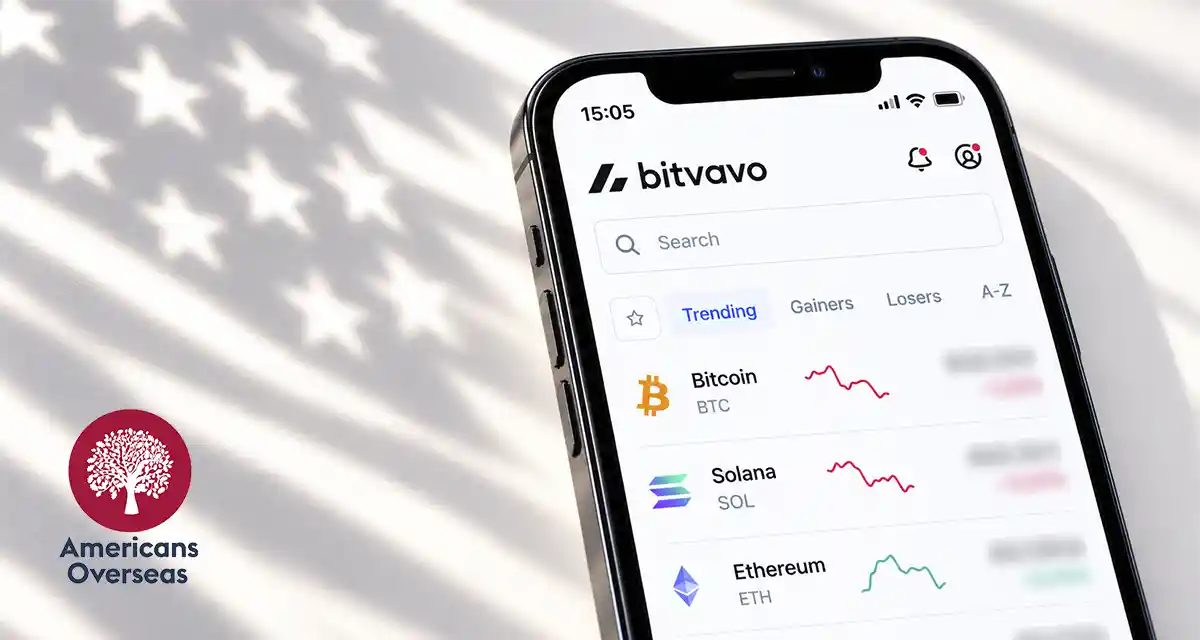
Bitvavo is asking existing customers to check their nationality and tax information. For US persons living in the Netherlands, this can be confusing because tax residence and US tax obligations are not the same. Answer the questions truthfully, but first check which status Bitvavo is asking you to provide.
Bitvavo is a Dutch crypto exchange where customers can buy, sell and hold bitcoin and other crypto assets. The platform is supplementing the information it holds about existing and new customers because of new European rules.
The main rule concerning tax information is DAC8. This directive extends the automatic exchange of information to crypto assets. Since 1 January 2026, crypto platforms have been collecting information about customers and reportable transactions. The first reporting will take place in 2027.
Bitvavo asks for information including your nationality, place of birth, tax identification number and the country or countries where you are liable for tax. By around the first reporting cycle, existing individual customers must have provided a self-certification that establishes their tax residence or tax residences.
Crypto platforms are actively reviewing their existing customer records and contacting customers to supplement their tax information. Bitvavo is not the only platform doing this. Coinbase, Bitpanda, Kraken, Crypto.com and bitFlyer Europe also ask for tax residences and tax identification numbers because of DAC8 or the international Crypto-Asset Reporting Framework.
The exact questions, deadlines and consequences differ between platforms. The fact that these exchanges collect tax information does not mean they all apply the same policy to US persons at the same time.
Unfortunately, many questions asked by Bitvavo and other financial institutions are fundamentally worded incorrectly. This can cause a customer to give the wrong answer or overlook the information icon. Both the financial institution, Bitvavo in this example, and the customer can be affected. Information may be reported to the wrong country. The customer may then face questions from tax authorities or a blocked account, while the institution may face incorrect reports, remediation costs and the risk of fines.
Tax residence is where most of the confusion arises. In its information, Bitvavo uses different terms such as “tax resident”, “paying tax” and “US person”. These terms do not mean the same thing:
You can live in the Netherlands and be a tax resident here while also having a US tax filing or information-reporting obligation. This does not automatically mean that you also have to pay US tax.
A question such as “Are you a tax resident of another country?” or “Do you pay tax in the US?” is therefore not automatically the same as “Are you a US person?” Look carefully at the question the screen actually asks. Ask Bitvavo for clarification if the form does not clearly distinguish between these situations.
A valid US passport is not the only indication. Birth in the United States, US citizenship acquired through a parent, a green card or a long period of residence in the US may also be relevant.
The free US Person check from Americans Overseas gives you an initial indication in approximately two minutes. You can also read the explanations about being born in the US and US person status and about US tax obligations while living in the Netherlands.
The test helps you identify the right follow-up questions. Have your circumstances assessed personally if your nationality, green card status or history of residence is unclear.
Find out in 2 minutes whether the IRS considers you a “US Person” and whether you may be required to file a US tax return — even if you live outside the United States.
Bitvavo asks customers to confirm through a self-certification that their tax information is correct and complete. Do not guess or select an answer automatically. It is important to provide the correct answer.
An answer given in a platform form does not determine whether you have a tax obligation under US law. Conversely, a possible US obligation does not disappear because the form fails to represent your situation clearly. You can find more background about reporting by financial institutions in the explanation of FATCA.
The consequences fall into three categories:
One important question remains unanswered. Bitvavo does not publish a general policy explaining what happens when an existing customer provides all the requested information and confirms that they are a US person. It is therefore unclear whether such confirmation affects the customer’s ability to retain or use the account.
DAC8 is a reporting rule, not a separate tax on crypto. The directive ensures that customer information and information about relevant crypto transactions reach tax authorities and can be exchanged between countries.
The filing, reporting and tax rules that apply to you depend on your personal circumstances. Filing a return, reporting information and paying tax are three different things.
We, the founders of Americans Overseas, were born in the Netherlands and received our American citizenship through our (American) mother.
When we first learned about the U.S.–Netherlands tax treaty around 2013, we felt disbelief (“this can’t be true”), anger (“how can they do this?”), fear (“will I get fined or have problems?”), and panic (“what should I do?”).
Unfortunately, it is true that there is a U.S. tax obligation for Dutch citizens who acquired American nationality by birth. There was no information from local authorities, the U.S. consulate referred us to the IRS, and the IRS itself was impenetrable.
That is why we started this initiative: to help others with reliable information, to prevent unnecessary panic, and to offer free, no‑obligation assistance. When needed, we can connect you with a network of affordable professionals (accountants) who can help you meet your U.S. tax obligations.
Contact us for more information

Co-founder
Michael Littaur, co-founder of Americans Overseas, discovered his U.S. tax liability only after selling his business. Together with Daan Durlacher, he founded Americans Overseas in 2014 to inform and support others with U.S. tax issues.
Read moreUnderstanding the US tax system, the obligations, and all the additional terms can be difficult. Especially if one lives outside of America. Is your question not answered? Contact us.
Bitvavo is supplementing its customer information because of new European reporting rules. DAC8 requires crypto platforms to collect information about customers and reportable crypto transactions from 1 January 2026, with the first reporting taking place in 2027.
No. US person is a US tax term that includes US citizens and US resident aliens, among others. You can be a tax resident of the Netherlands while also having a US tax filing or information-reporting obligation.
Not automatically. Your status may require you to file a US tax return or information forms, but filing a return and paying tax are different matters. The outcome depends on your personal circumstances.
Check whether the question concerns nationality, tax residence, tax liability or US person status. Ask Bitvavo in writing how to record your US tax connection, and keep its response and a copy or screenshot of your self-certification.
Yes. According to Bitvavo, missing tax information may lead to restrictions that prevent you from depositing, trading or withdrawing until the required information is complete.