



Accidental Americans in France Face US tax problems
4 min
04-11-2022
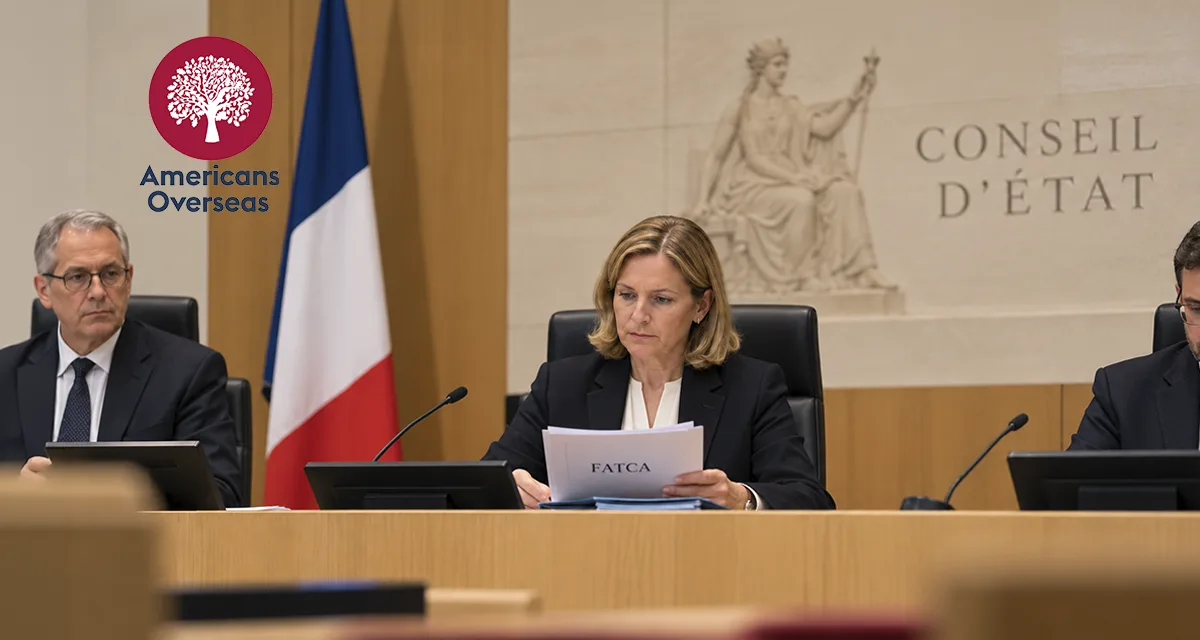
French Accidental Americans have challenged the transfer of their financial information to the United States under FATCA. France’s highest administrative court has now rejected a request to temporarily suspend these transfers. For the time being, financial information collected in France will therefore continue to be passed to the IRS. However, the wider European debate about FATCA, privacy and data protection is far from over.
For Americans and Accidental Americans living in Europe, FATCA can have very practical consequences.
Banks and other financial institutions identify certain customers as US persons and report information about their financial accounts. In France, this information is first sent to the French tax administration, the Direction générale des Finances publiques (DGFiP), which then transfers the relevant data to the US Internal Revenue Service (IRS).
This system is based on the FATCA agreement signed between France and the United States on November 14, 2013.
In August 2026, the long-running legal debate surrounding these data transfers entered a new phase.
On August 19, 2026, a case was brought before the Conseil d’État, France’s highest administrative court.
The aim was to require the French government to temporarily suspend the automatic transfer to the IRS of banking and tax information collected in France.
The request followed an earlier approach to the French government. In June 2026, the Minister of Economy and Finance refused to suspend the application of the France-US FATCA agreement.
The case therefore moved to the courts.
French newspaper La Tribune highlighted a central question behind the dispute: can France continue transferring this information to the United States while the protection of similar data transfers is being challenged under European law?
The process begins with French financial institutions.
Banks identify customers who qualify as US persons under the applicable FATCA rules. They report the relevant account information to the DGFiP, rather than reporting directly to the IRS.
The French tax administration subsequently transfers the required information to the United States.
Depending on the account, the information reported can include:
FATCA, the Foreign Account Tax Compliance Act, was enacted by the United States in 2010 as part of its efforts to identify financial assets held abroad by US taxpayers.
Foreign financial institutions face strong incentives to cooperate with the FATCA system because non-compliance can affect their access to the US financial system.
Intergovernmental agreements such as the one between France and the United States were introduced so that local financial institutions could report through their own national tax authorities.
You can read more about the basic system in our explanation of what FATCA is and how it affects Americans abroad.
On September 14, 2026, the Conseil d’État rejected the request to temporarily suspend the transfer of FATCA data from France to the United States.
The applicants argued that circumstances had changed since earlier French rulings on FATCA.
One important development is a Belgian case in which questions concerning FATCA and European law have been referred to the Court of Justice of the European Union.
The French case therefore asked the court, in effect, whether FATCA transfers should be suspended as a precaution until the European court provides greater clarity.
The Conseil d’État did not agree.
It concluded that, at this stage, the arguments did not create the level of serious doubt about the legality of the government’s decision that would be required to justify an interim suspension.
The practical result is clear:
France continues to transfer FATCA information to the United States.
This does not mean that every legal question surrounding FATCA and European data protection has been definitively settled.
Belgium has become an important part of the European debate over FATCA data transfers.
In 2023, the Belgian Data Protection Authority ruled that certain transfers of data concerning Belgian Accidental Americans to the United States were incompatible with the GDPR and ordered the transfers to stop.
That ruling did not end the proceedings.
The Belgian Market Court subsequently annulled the decision and the dispute continued.
The matter has now reached a particularly important stage because the Belgian court has referred a series of preliminary questions to the Court of Justice of the European Union.
These questions concern issues including:
The eventual answers could therefore have implications beyond Belgium.
This European uncertainty was one of the arguments for temporarily stopping the French transfers.
For now, however, France has chosen not to do so.
Similar questions have already reached the courts in the Netherlands.
Dutch Accidental Americans tried to prevent the Dutch Tax Administration from transferring their financial information to the IRS.
They argued, among other things, that European data-protection rules gave them the right to object to or restrict this processing.
The District Court of Gelderland rejected those arguments.
The court found that the Dutch-US FATCA agreement creates a legal obligation for the Dutch Tax Administration to supply the relevant information to the United States.
FATCA data transfers between the Netherlands and the IRS therefore continue as well.
We previously explained that ruling in more detail in Dutch court: FATCA data of Accidental Americans in the Netherlands may still be shared with the IRS.
FATCA was introduced as an instrument against offshore tax evasion.
However, it also affects people whose connection with the United States may be limited.
An Accidental American may have acquired US citizenship automatically by being born in the United States or, in some circumstances, through an American parent.
They may nevertheless have:
Their financial life may be entirely based in Europe, while US citizenship can still bring them within the US tax system and FATCA reporting framework.
No.
The transfer of information under FATCA does not mean that every reported account automatically results in an IRS investigation or a US tax bill.
The IRS receives very large quantities of FATCA data from financial institutions and foreign tax authorities.
A 2026 report by the US Treasury Inspector General for Tax Administration found that enforcement activity based on FATCA information has so far been relatively limited.
That does not, however, remove any underlying US filing or reporting obligations.
FATCA reporting and an individual’s US tax position are related issues, but they are not the same thing.
We explain this distinction in more detail in IRS FATCA Data on Americans Abroad: What the New TIGTA Report Shows.
No.
The September ruling concerned a request for an interim suspension of the French FATCA transfers.
The Conseil d’État rejected that request.
That is not the same as a final European ruling that every aspect of FATCA is compatible with the GDPR or other EU law.
Important questions are still before the Court of Justice of the European Union as a result of the Belgian proceedings.
Until there is further clarification, however, existing FATCA agreements continue to operate.
For an individual Accidental American, the legal debate over FATCA and the practical question of their own US status should be viewed separately.
A court challenge to FATCA does not itself remove existing US tax or reporting obligations.
Someone who discovers that they are considered a US citizen or US person, but has never filed US tax returns, should therefore first establish what obligations actually apply to their individual situation.
For some Americans abroad who have not previously filed, the IRS Streamlined Procedure may provide a route to becoming compliant, depending on their circumstances.
Others may be considering whether to retain or renounce their US citizenship.
Renunciation is a separate legal, financial and personal decision. It should not be treated simply as a response to FATCA.
The French ruling is another chapter in a much wider European discussion about FATCA, data protection and the position of Accidental Americans.
For now, the practical situation is straightforward:
FATCA data transfers from France to the United States continue.
The same is currently true in the Netherlands.
At European level, however, important questions remain unresolved. The Belgian proceedings may eventually provide greater clarity from the Court of Justice of the European Union.
Americans Overseas will continue to follow these developments and what they could mean for Americans and Accidental Americans living in Europe.
This article provides general information only and should not be considered individual tax or legal advice. Your US tax and reporting position depends on your personal circumstances.
Contact us for more information
Sources

General Manager & Partner
Linda Mabelis is the General Manager and Owner at Americans Overseas, dedicated to helping individuals find the right tax attorney for their unique situations. With extensive work experience and a deep understanding of the complexities facing Americans Overseas, Linda is committed to providing personalized and effective solutions.
Read moreUnderstanding the US tax system, the obligations, and all the additional terms can be difficult. Especially if one lives outside of America. Is your question not answered? Contact us.
Yes. The French Conseil d’État rejected a request in September 2026 to temporarily suspend FATCA data transfers. The existing France-US FATCA arrangement therefore continues to operate.
Depending on the applicable reporting requirements, information can include a US person’s name, address, Tax Identification Number, account number, account balance or value and certain financial information associated with the account.
No. The September 2026 case concerned a request to temporarily suspend FATCA data transfers. The court found there was not sufficient serious doubt about the legality of the government’s decision to justify such an interim suspension.
The Belgian Market Court has referred 13 questions concerning FATCA and European law to the Court of Justice of the European Union. The answers could provide important guidance on FATCA data transfers and EU data-protection rules.
Generally, an individual cannot simply opt out of FATCA reporting when a bank or tax authority has a legal reporting obligation. The precise rules depend on the country, financial institution and individual circumstances.
No. FATCA is primarily an information-reporting system. Being reported under FATCA does not by itself determine whether US tax is owed. US tax liability and filing requirements depend on the individual circumstances.