


IRS and UK strengthen tax enforcement cooperation: what does this mean for Americans abroad?
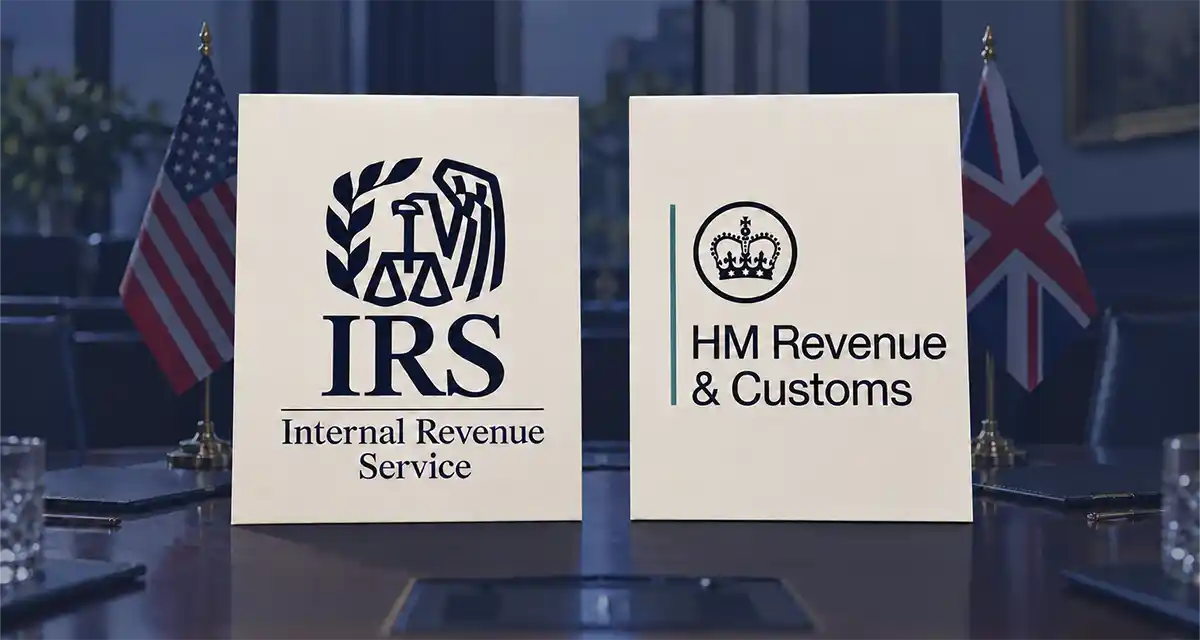
The IRS has highlighted its cooperation with HM Revenue & Customs (HMRC) on tackling international tax evasion. Its October 7, 2026 announcement specifically mentions undeclared foreign bank accounts and missing FBARs. If you are American and live abroad, this does not create a new reporting obligation. It does make understanding the existing rules important.
Why are the IRS and HMRC working together?
The cooperation supports HMRC’s Strengthened Reward Scheme, launched in November 2025. The IRS helped HMRC develop the programme by sharing experience from its own Whistleblower Office.
Whistleblowers provide information about suspected wrongdoing. HMRC’s scheme focuses on serious tax avoidance or evasion, typically involving wealthy individuals, large businesses or offshore arrangements. Financial rewards are discretionary and depend on information helping HMRC collect at least £1.5 million in tax.
The IRS announcement describes how offshore accounts, shell companies and transactions across countries can conceal assets or income. Information from people with direct knowledge can help authorities investigate these arrangements.
Why does the announcement mention FBARs?
The IRS explicitly lists undeclared foreign accounts and failure to file an FBAR among the matters whistleblowers can report.
An FBAR, or Report of Foreign Bank and Financial Accounts, is a separate report filed with the Financial Crimes Enforcement Network (FinCEN). It is not part of your US income tax return.
Generally, a US person must file if they have a financial interest in, or signature or other authority over, reportable financial accounts outside the United States and their combined value exceeds $10,000 at any point during the calendar year. Exceptions can apply.
For example, if you are a US citizen living in the UK, an ordinary current account or savings account held at a bank in the UK is generally a foreign account for US reporting purposes. Paying UK tax on your income does not, by itself, remove an FBAR obligation.
You may therefore need to report accounts even if you owe no additional US income tax. The $10,000 threshold applies to the combined value of the relevant accounts, not separately to each one.
Are ordinary Americans abroad being targeted?
The announcement does not describe a specific enforcement campaign against ordinary Americans living abroad. Nor does it change the FBAR threshold or introduce a new filing requirement.
However, this should not be read as an exemption for people who were unaware of the rules. Missing reports can have consequences even when the failure was unintentional. The facts of the individual case matter.
What if you only recently discovered that you are American?
You may have been born in the United States and moved to the UK as a young child. Or you may have acquired US citizenship through an American parent, depending on the citizenship rules that applied at your birth.
People in these circumstances are sometimes called accidental Americans. If you have lived and worked outside the US for decades, discovering possible US filing obligations can be unsettling.
Being unaware of a requirement does not automatically establish deliberate tax evasion. Equally, it does not automatically remove the requirement or guarantee relief from penalties.
Can you correct previous filing failures?
The IRS offers Streamlined Filing Compliance Procedures for eligible taxpayers whose failures resulted from non-willful conduct. This can include mistakes, negligence or a good-faith misunderstanding of the law.
For qualifying taxpayers abroad, the Streamlined Foreign Offshore Procedures generally require three years of overdue or amended tax returns, with required information returns, and six years of overdue FBARs. The submission also requires a signed certification of non-willful conduct and payment of any tax and interest due.
Eligibility depends on more than living abroad or saying that you did not know the rules. There are specific residence and other requirements. People already under an IRS civil examination or criminal investigation are not eligible.
If you have missed filings, an adviser can assess whether this route fits your circumstances. Americans Overseas can explain its Streamlined Procedure service and help you find appropriate professional support.
What should you do now?
If your filings are up to date, this announcement does not create an additional filing task. If you are unsure, check your US status, whether tax returns or account reports were required, and what you have already filed.
If something is missing, seek advice on how to correct it. Your citizenship or residence status, accounts, income and filing history will help determine the appropriate next step.
This article provides general information and does not constitute individual tax or legal advice.
Get Informed with Americans Overseas
We, the founders of Americans Overseas, were born in the Netherlands and received our American citizenship through our (American) mother.
When we first learned about the U.S.–Netherlands tax treaty around 2013, we felt disbelief (“this can’t be true”), anger (“how can they do this?”), fear (“will I get fined or have problems?”), and panic (“what should I do?”).
Unfortunately, it is true that there is a U.S. tax obligation for Dutch citizens who acquired American nationality by birth. There was no information from local authorities, the U.S. consulate referred us to the IRS, and the IRS itself was impenetrable.
That is why we started this initiative: to help others with reliable information, to prevent unnecessary panic, and to offer free, no‑obligation assistance. When needed, we can connect you with a network of affordable professionals (accountants) who can help you meet your U.S. tax obligations.
Contact us for more information
Sources
- IRS: partnership with the UK whistleblower programme, IR-2026-120, October 7, 2026
- HMRC: reporting serious tax avoidance or evasion
- IRS: Report of Foreign Bank and Financial Accounts (FBAR)
- IRS: Streamlined Filing Compliance Procedures
- IRS: Streamlined Foreign Offshore Procedures for taxpayers residing outside the US

Written by Linda Mabelis
General Manager & Partner
Linda Mabelis is the General Manager and Owner at Americans Overseas, dedicated to helping individuals find the right tax attorney for their unique situations. With extensive work experience and a deep understanding of the complexities facing Americans Overseas, Linda is committed to providing personalized and effective solutions.
Read moreQuestions about IRS and HMRC cooperation
Understanding the US tax system, the obligations, and all the additional terms can be difficult. Especially if one lives outside of America. Is your question not answered? Contact us.
-
Does the IRS and HMRC announcement introduce new FBAR rules?
No. The October 7, 2026 announcement highlights cooperation on whistleblower programmes and international tax evasion. It does not introduce a new FBAR obligation or change the reporting threshold.
-
Can I need an FBAR even if I already pay tax in the UK?
Yes. Paying UK tax does not, by itself, remove an FBAR obligation. US persons must generally report relevant foreign financial accounts when their combined value exceeds $10,000 at any point during the calendar year. Exceptions can apply.
-
Does each foreign account have to exceed $10,000?
No. The threshold applies to the combined value of the relevant foreign financial accounts. An individual account can be reportable even if its own balance stays below $10,000.
-
Does not knowing the rules automatically qualify me for the Streamlined Procedure?
No. You must meet the applicable eligibility requirements and certify that your failures resulted from non-willful conduct. Living abroad or being unaware of the rules does not automatically qualify you. An adviser can assess your circumstances.