


Trump tax reform and Americans Overseas
2 min
14-12-2017

The Trump Account is designed to give U.S. children a financial head start. If you live outside the United States, it is still possible to open one for your child — but you’ll need to plan carefully. Be sure to obtain an SSN, choose the right financial institution, and understand both U.S. and local tax obligations.
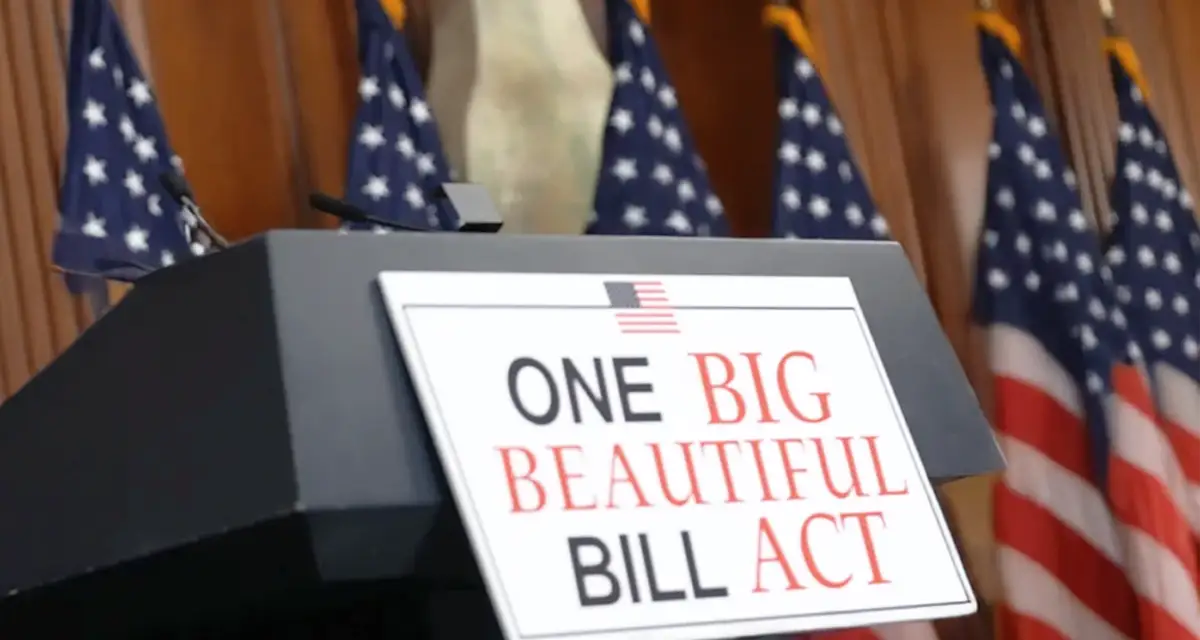
The Trump Account is a new U.S. savings and investment account for children under the age of 18. It was created under the One Big Beautiful Bill Act and is designed to help young U.S. citizens start building long-term savings from an early age
For Americans living overseas, the Trump Account can be relevant too. A child does not have to live in the United States to be a U.S. citizen. If your child has U.S. citizenship, a valid Social Security Number and meets the account requirements, a Trump Account may be possible. However, families outside the U.S. should pay close attention to SSN rules, account access, U.S. tax treatment, local tax consequences and reporting obligations.
The Trump Account is part of the One Big Beautiful Bill Act (OBBBA) and functions as a hybrid between a savings account and an investment account. Parents, relatives, or even employers can contribute. Children born between January 1, 2025, and December 31, 2028, are eligible to receive an automatic $1,000 deposit from the federal government.
A Trump Account is a tax-deferred investment account for children. Technically, it is linked to the U.S. retirement account framework: the rules are based on IRC Section 530A and connected to traditional IRA rules.
This is important for families abroad. Although the account may receive favorable treatment in the U.S., your country of residence may not treat it in the same way. A foreign tax authority may view the account as an investment account, a pension-style account, taxable wealth or taxable investment income, depending on local law.
Parents, guardians, relatives and, in some cases, employers may contribute to the account. The account is intended to grow during the child’s minority. After the growth period, the account generally becomes subject to traditional IRA-style rules.
There are two separate eligibility questions:
A Trump Account can generally be opened for a U.S. citizen child under the age of 18 with a valid Social Security Number. This means that older children may still be eligible for a Trump Account, even if they do not qualify for the $1,000 federal contribution.
The $1,000 federal pilot contribution is more limited. It applies to eligible U.S. children born between January 1, 2025 and December 31, 2028, provided the required election is made and the child meets the applicable rules.
This distinction matters for Americans overseas. If your child was born before 2025, you should not assume the account is irrelevant. Your child may not qualify for the $1,000 government contribution, but a Trump Account may still be possible.
For babies born between January 1, 2025 and December 31, 2028, the Trump Account may include a one-time $1,000 federal pilot contribution. The account still requires the proper election and the child must have a valid SSN.
For children born abroad to a U.S. citizen parent, the first practical step is often not the account itself, but confirming U.S. citizenship status and obtaining a Social Security Number. Without an SSN, the account cannot be opened.
If your child was born outside the U.S. and may have acquired U.S. citizenship through a parent, it is important to clarify the child’s status before making decisions.
The IRS has now published Form 4547, Trump Account Election(s). This form is used to make an election to open an initial Trump Account and, where applicable, to request the one-time $1,000 pilot program contribution.
The election can be made through Form 4547, and the IRS has also made electronic submission possible through an IRS Individual Account. The proposed regulations state that the election to open an initial Trump Account must be made on or before December 31 of the calendar year in which the eligible individual reaches age 17.
For families overseas, this means the practical route may involve:
Do not rely on unofficial websites. The official government route is through IRS.gov and the official Trump Account election process.
The Trump Account rules include different types of contributions.
The most discussed amount is the one-time $1,000 federal pilot contribution. This applies only to eligible children born between January 1, 2025 and December 31, 2028.
There is also an annual contribution limit. The briefing states that annual contributions are up to $5,000, indexed after 2027, and that employer contributions up to $2,500 can count toward that limit while being excluded from the employee’s income. The $1,000 federal pilot contribution, certain qualified general contributions and rollovers do not count toward the $5,000 annual limit.
Some families may also see references to a $250 contribution. This is not the same as the federal $1,000 pilot contribution. It refers to a separate philanthropic contribution announced by Michael and Susan Dell for qualifying children age 10 and under in eligible ZIP codes. The White House announcement states that children age 10 and under living in ZIP codes with median incomes below $150,000 may receive an additional $250.
For families outside the U.S., eligibility for any non-federal contribution may be more complicated. Check the exact rules before assuming your child qualifies.
1. Confirm whether your child is a U.S. citizen
A child born outside the United States may still be a U.S. citizen if one or both parents are U.S. citizens and the transmission rules are met.
2. Obtain a Social Security Number
A valid SSN is required. If your child does not have one, you may need to apply through the appropriate U.S. route from abroad.
3. Check eligibility for the $1,000 contribution
Only children born from January 1, 2025 through December 31, 2028 are potentially eligible for the federal $1,000 pilot contribution.
4. Identify who can make the election
The proposed regulations provide an order of priority for who may make the election. The IRS explains that this can include a legal guardian, parent, adult sibling or grandparent, depending on the situation.
5. File Form 4547 or use the electronic election route
Form 4547 is the IRS form for Trump Account elections. The IRS states that taxpayers can submit Form 4547 electronically and view the latest submission status through their IRS Individual Account.
6. Choose a suitable U.S. financial institution or trustee
This may be the difficult part for families abroad. Not every U.S. bank or brokerage accepts clients with a foreign residential address. Do not assume that major providers will automatically accept overseas families.
7. Check U.S. and local tax consequences
The Trump Account may be tax-deferred in the U.S., but that does not guarantee favorable treatment in your country of residence.
8. Keep records
Keep copies of the child’s SSN documentation, proof of citizenship, Form 4547, account statements and contribution records.
The account must be opened through an eligible route and with a suitable provider. Families abroad should be especially careful here.
Some U.S. financial institutions may not accept clients who live outside the United States. Others may require a U.S. address, additional identity checks or specific documentation for non-U.S. residents.
At this stage, do not choose a provider based only on a general online claim. Confirm directly whether the provider:
Parents who live outside the United States may wonder how a Trump Account compares with other U.S. savings and investment options for children, such as a 529 plan, a Roth IRA for minors or a UTMA/UGMA custodial account. The right choice depends not only on U.S. tax rules, but also on how your country of residence treats the account.
| Feature | Trump Account | 529 Plan | Roth IRA for minors | UTMA/UGMA |
|---|---|---|---|---|
| Main purpose | Long-term child savings and investment | Education savings | Retirement-style savings for a child with earned income | General custodial investment account |
| Who it is for | U.S. citizen children under 18 with a valid SSN | Beneficiaries, usually for education expenses | Minors with qualifying earned income | Minors |
| Federal contribution | Possible $1,000 federal pilot contribution for eligible children born from 2025 through 2028 | No federal seed contribution | No federal seed contribution | No federal seed contribution |
| Contributions | Annual contribution limits apply | High limits, usually state-specific | Limited by IRA rules and the child’s earned income | Gifts or transfers to the child |
| U.S. tax treatment | Tax-deferred structure linked to IRA rules | U.S. tax advantages for qualified education expenses | Potential Roth tax advantages | Investment income may be taxable |
| Withdrawals | Generally subject to IRA-style rules after the growth period | Most favorable when used for qualified education expenses | Retirement-oriented withdrawal rules | The child generally gains control at the applicable legal age |
| Relevance for Americans overseas | Needs careful U.S. and local tax review | May not receive favorable tax treatment outside the U.S. | Requires earned income and may create local tax questions | May create local tax, gift tax or reporting issues |
For Americans overseas, the “best” account is not only a U.S. tax question. A Trump Account may be tax-deferred in the United States, but your country of residence may not treat it in the same way. Before opening or funding any child savings account, check the U.S. tax consequences, local tax treatment, reporting obligations and practical access for families with a foreign residential address.
The Trump Account is a U.S. account, but that does not remove the broader tax complexity for Americans abroad.
In the U.S., Trump Accounts are connected to traditional IRA rules. IRS Notice 2025-68 explains that after the growth period, Trump Accounts generally become subject to rules that apply to traditional IRAs, including rules on contributions, distributions, required minimum distributions, rollovers, Roth conversions, ordinary income taxation and reporting.
Outside the U.S., the treatment may be different. Your country of residence may not recognize the account as a U.S. tax-deferred retirement-style account. It may tax the account annually, tax investment income, include it in wealth tax calculations or require reporting.
For families abroad, also consider:
Yes, relatives may be able to contribute, but opening the account and contributing to it are not the same thing.
The proposed rules include an order of priority for who may make the election to open the initial account. A legal guardian or parent will usually come before a grandparent. If no pilot program election is being made, the proposed ordering rule includes legal guardian, parent, adult sibling and grandparent in that order.
This is especially relevant when grandparents live in the U.S. but the child lives abroad. A grandparent may want to help, but the family still needs to confirm who is legally authorized to make the election, who will be the responsible party and whether the account provider accepts the family’s situation.
Use official government sources only. Be careful with websites that look official but are not.
The briefing specifically notes search interest around unofficial-looking domains and recommends warning readers about scams. For this article, it is better to direct users to IRS.gov, Form 4547 and official government guidance rather than naming unverified application websites.
A useful warning block:
Important: Do not enter your child’s SSN, passport details or personal information into an unofficial Trump Account website. Use IRS.gov, your IRS Individual Account or a confirmed official government route.
A Trump Account may sound simple, but overseas families should review the risks carefully.
Possible drawbacks include:
We, the founders of Americans Overseas, were born in the Netherlands and received our American citizenship through our (American) mother.
When we first learned about the U.S.–Netherlands tax treaty around 2013, we felt disbelief (“this can’t be true”), anger (“how can they do this?”), fear (“will I get fined or have problems?”), and panic (“what should I do?”).
Unfortunately, it is true that there is a U.S. tax obligation for Dutch citizens who acquired American nationality by birth. There was no information from local authorities, the U.S. consulate referred us to the IRS, and the IRS itself was impenetrable.
That is why we started this initiative: to help others with reliable information, to prevent unnecessary panic, and to offer free, no‑obligation assistance. When needed, we can connect you with a network of affordable professionals (accountants) who can help you meet your U.S. tax obligations.
Contact us for more information
Official source
Useful links from Americans Overseas

General Manager & Partner
Linda Mabelis is the General Manager and Owner at Americans Overseas, dedicated to helping individuals find the right tax attorney for their unique situations. With extensive work experience and a deep understanding of the complexities facing Americans Overseas, Linda is committed to providing personalized and effective solutions.
Read more